
Gentle Chiropractic Care for Growing Children
Paediatric Chiropractic Care — From Newborns to Teenagers
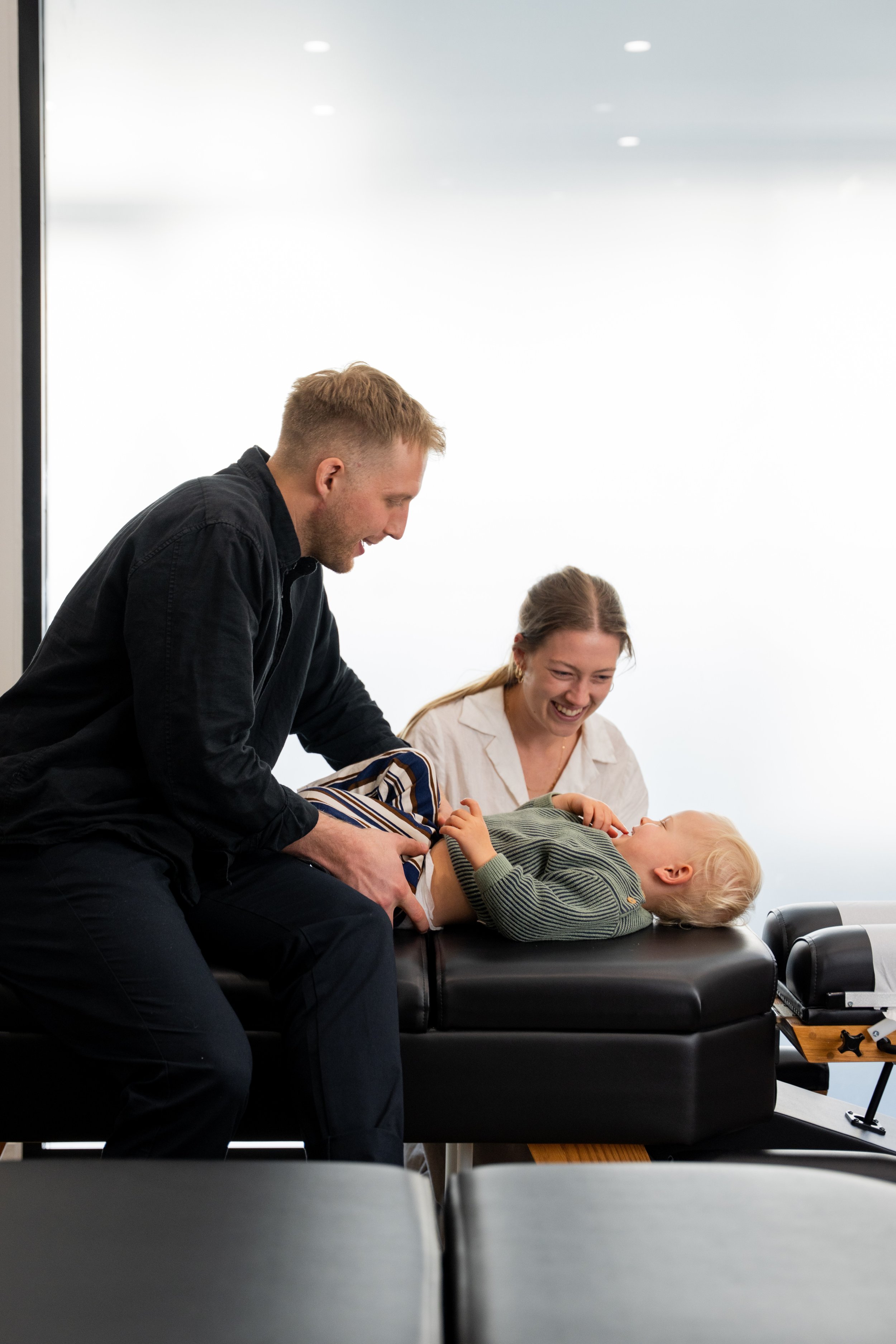
At ChiroCare, our chiropractic care is gentle, specific, and tailored to each child's age, size, and stage of development. Precise, considered care that works with the developing body rather than against it.
Children aren't small adults. Their nervous systems are developing at a rate that will never be matched again in their lifetime — and that development depends heavily on the quality of information the brain receives from the body. The spine is at the centre of that process.
When spinal movement is restricted or altered at any stage of childhood, research suggests this may influence development in ways that aren't always obvious or immediately connected back to the spine.
Newborn
Birth is one of the most physically demanding events a human body will ever experience — and that includes the baby. Even straightforward deliveries place significant forces through the infant's head, neck, and spine. When those forces leave behind restrictions in spinal movement, the effects may show up in ways parents don't always recognise as spinal related.
Signs your newborn may benefit from a chiropractic assessment:
Difficulty latching or feeding
Preference for turning the head to one side
Discomfort on the change table or during dressing
Unsettled behaviour or colic
Difficulty with tummy time
Plagiocephaly (flat head syndrome)
Dislike of being held on one side versus the other
Dislike of car seats
These signs are worth having assessed early. In our experience the earlier we can identify and address restrictions in infant spinal movement, the better the outcomes tend to be.
Infants and Toddlers
The first three years of life represent an extraordinary period of neurological development. The brain is building new connections rapidly, and research suggests that the quality of sensory input it receives — particularly from the spine and joints — may play a role in supporting that process.
Developmental milestones like rolling, sitting, crawling, standing, and walking require precise coordination between the brain, spinal cord, and musculoskeletal system. While every child develops at their own pace, if you have concerns about your child's movement patterns, coordination, or the timing of their milestones, it is always worth having them assessed. Identifying whether spinal or neurological factors may be contributing is part of what we do — and we will always refer on when appropriate.
Signs that may warrant assessment in infants and toddlers:
Asymmetrical movement patterns
Sensitivity to touch or sensory input
Unsettled sleep
Persistent head tilt or postural asymmetry
Coordination or balance difficulties as movement develops
Concerns around the timing or quality of motor milestones
Preschoolers
As children move through their preschool years the nervous system continues to mature. This is a period where sensory processing, motor control, coordination, and social development are all accelerating simultaneously. Research suggests that the quality of sensory information the brain receives from the spine and body may support how well these systems develop and integrate.
Some children in this age group experience difficulties with sensory processing, motor coordination, balance, or sleep that may have a spinal or neurological component worth exploring. We take a thorough, whole child approach and work collaboratively with other healthcare providers where needed.
Signs that may warrant assessment in preschoolers:
Sensory sensitivities or processing difficulties
Poor balance or coordination
Difficulty with fine or gross motor tasks
Unsettled or disrupted sleep
Digestive irregularity
Postural asymmetry
School Age Children
Starting school places new physical demands on a child's body — hours of sitting, carrying heavy bags, learning to write, and navigating increasingly complex environments. This is also the age where postural habits begin to form and where early signs of scoliosis are most commonly identified.
Research suggests that restricted spinal movement may affect the quality of sensory signals reaching the brain. Supporting healthy spinal movement and posture during these years is something we consider an important part of a child's overall health picture.
Signs that may warrant assessment in school age children:
Poor posture or postural asymmetry
Frequent headaches
Difficulty sitting comfortably for extended periods
Coordination concerns or clumsiness
Recurring back or neck pain
Early signs of scoliosis
Disturbed sleep
Sensory sensitivities
Teenagers
Adolescence brings rapid skeletal growth, increased sporting demands, prolonged screen time, and significant physical and emotional load — all placing real stress on the developing spine and nervous system. This is the most common window for scoliosis to develop and progress, and a time when spinal health deserves particular attention.
Research suggests that a spine that moves well may support the nervous system's ability to adapt and regulate during these demanding years — influencing everything from physical performance and recovery to sleep quality and general wellbeing.
Signs that may warrant assessment in teenagers:
Back or neck pain
Postural changes or asymmetry
Headaches or migraines
Fatigue that sleep doesn't resolve
Disturbed sleep
Reduced performance or recovery in sport
Early signs of or diagnosed scoliosis
Our Approach to Paediatric Care
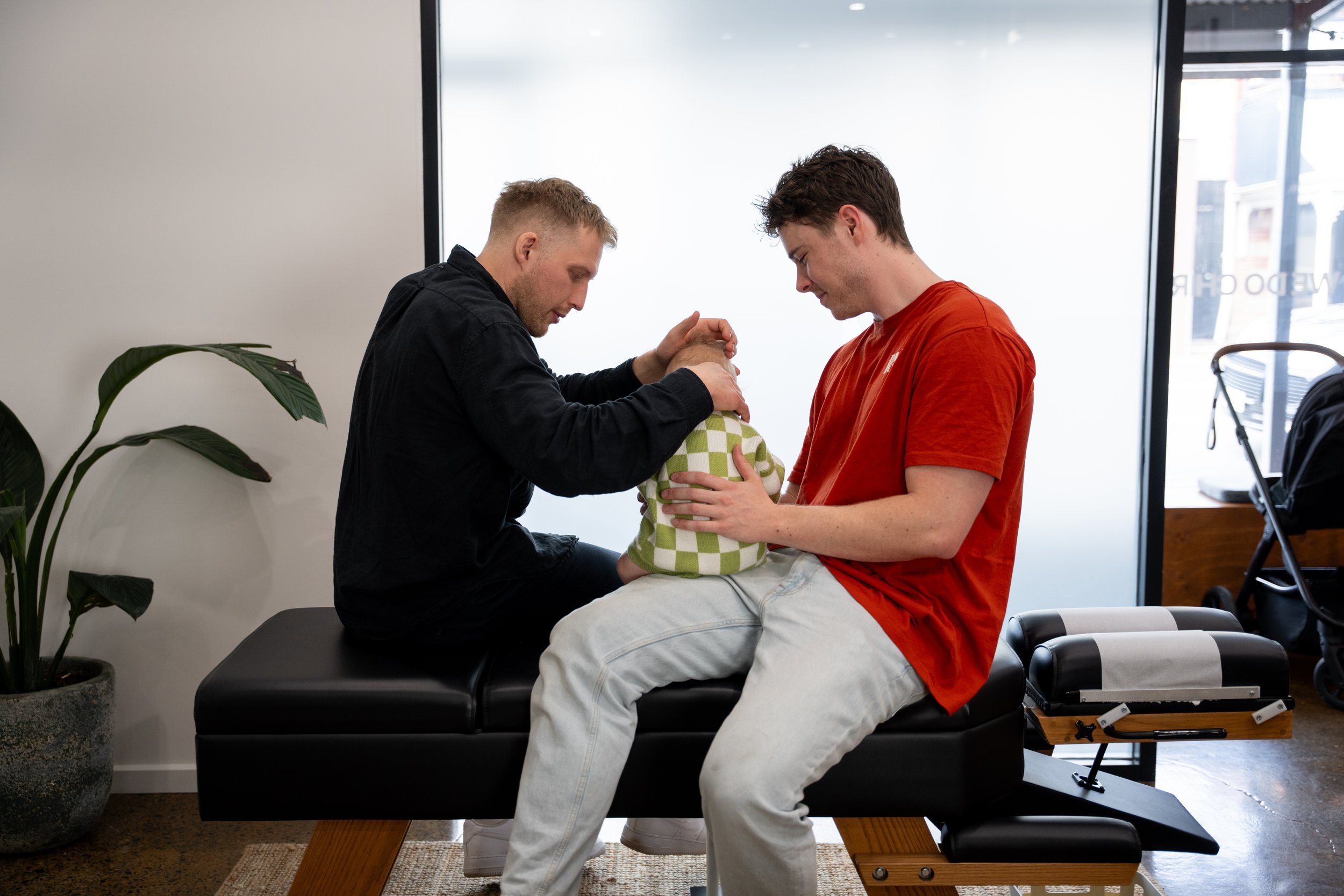
At ChiroCare, our chiropractic team will take the time to understand each child's full story — their birth, their development, their milestones, and what's showing up now. Our paediatric adjustments are specifically modified for each child's age and stage — gentle, precise, and tailored to each stage of childhood.
We pride ourselves on educating parents every step of the way. You will always know what we are doing, why we are doing it, and what to expect — because your confidence in your child's care matters as much as the care itself. We work collaboratively with other healthcare providers and will always refer on when a concern falls outside our scope.
We also offer complimentary phone consultations for new families, so you can ask questions and get a feel for whether ChiroCare is the right fit — before committing to anything.
What to Expect During Your Child’s Appointment
Comprehensive assessment of spinal alignment, posture, and movement
Evaluation of nervous system function and any structural shifts
Gentle chiropractic adjustments tailored for children of all ages
Guidance on posture, ergonomic habits, and healthy activity choices
Monitoring of developmental progress to ensure optimal growth and function
Our treatments are gentle, non-invasive, and specifically adapted to your child’s needs, promoting comfort, confidence, and overall well-being.